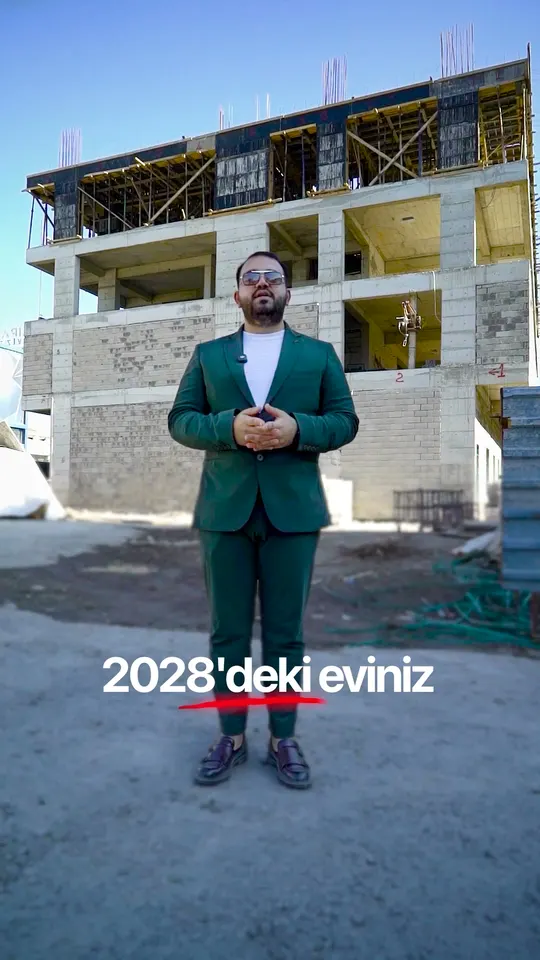
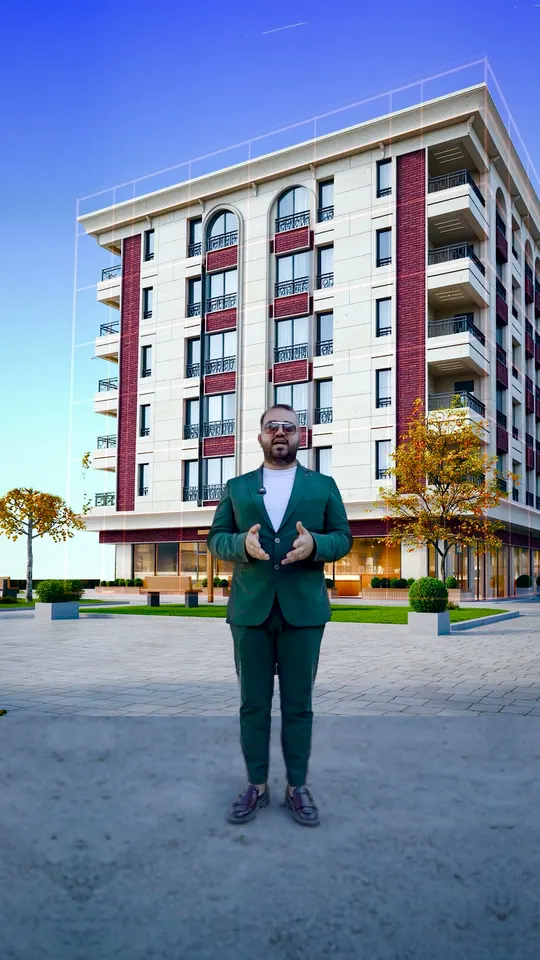
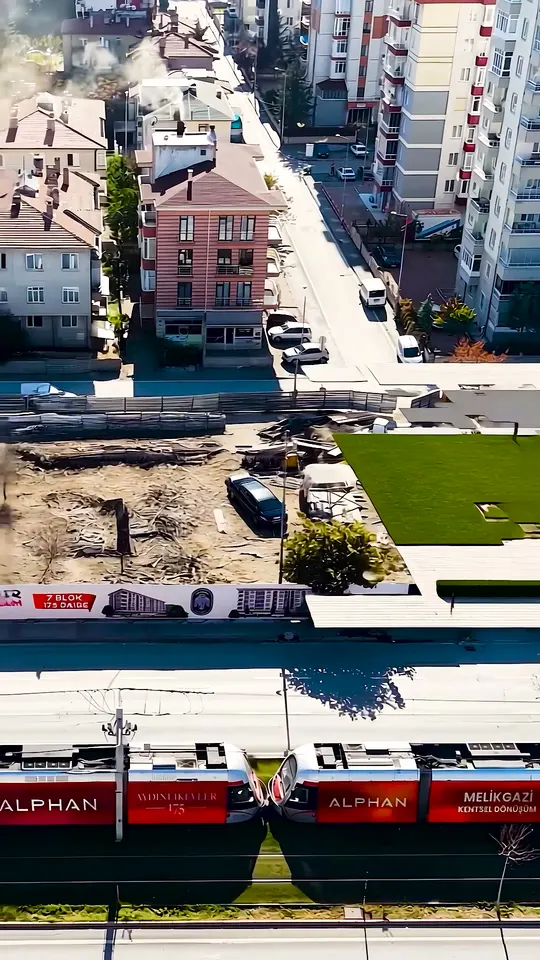
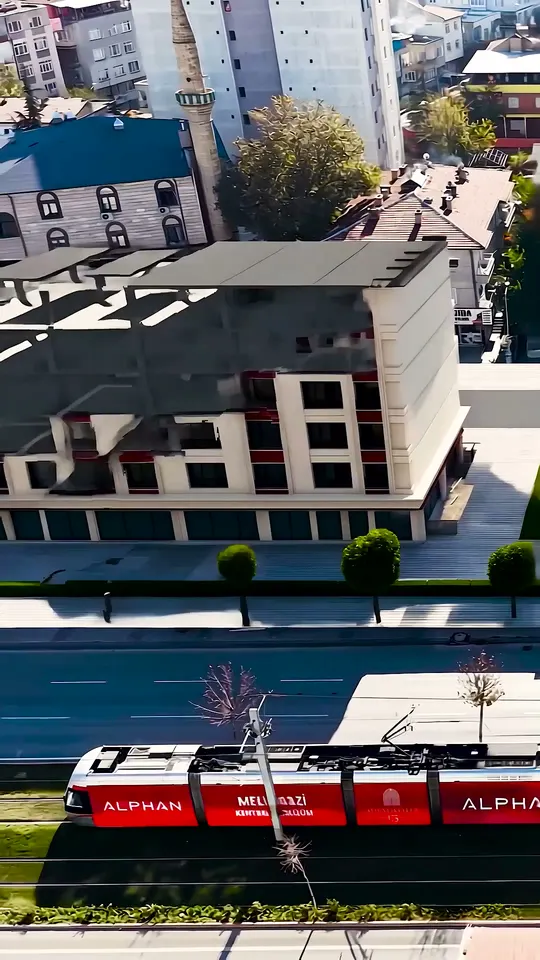
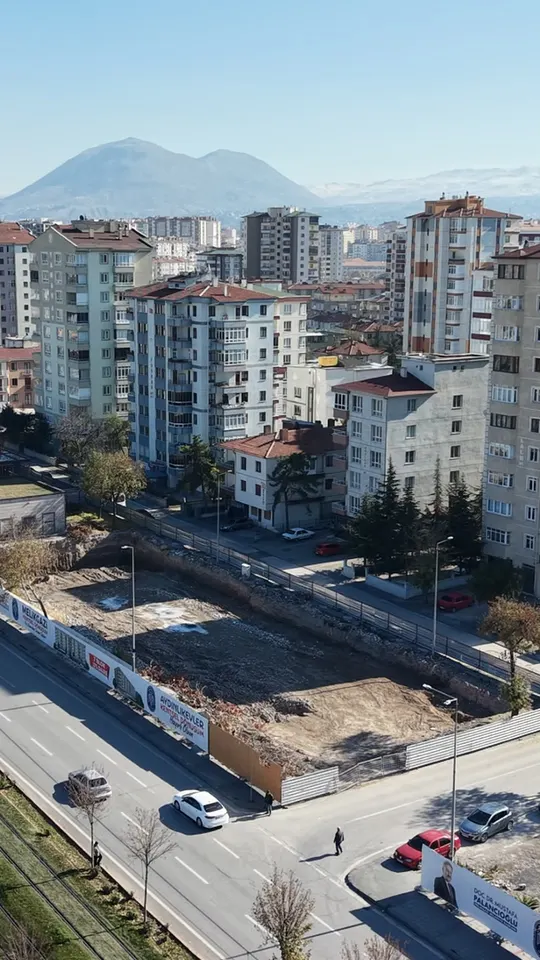
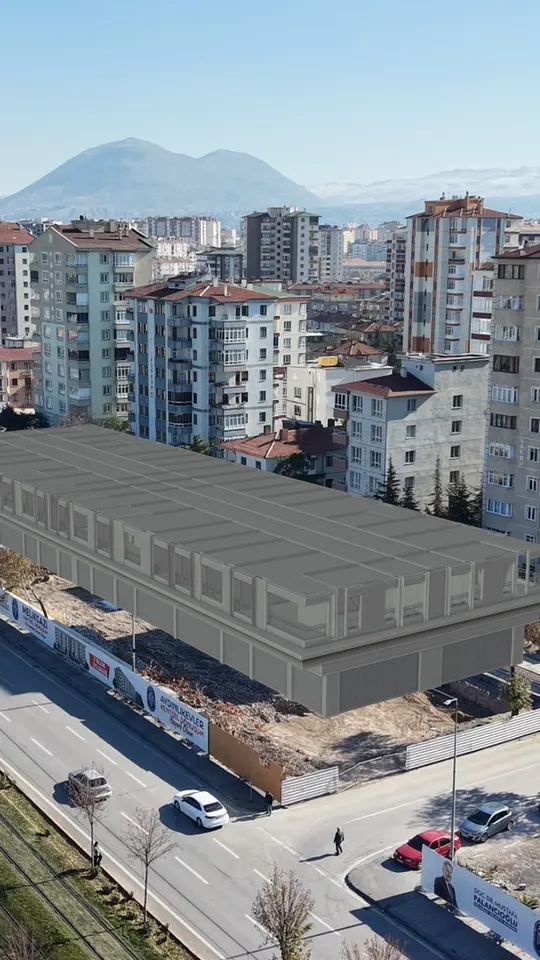
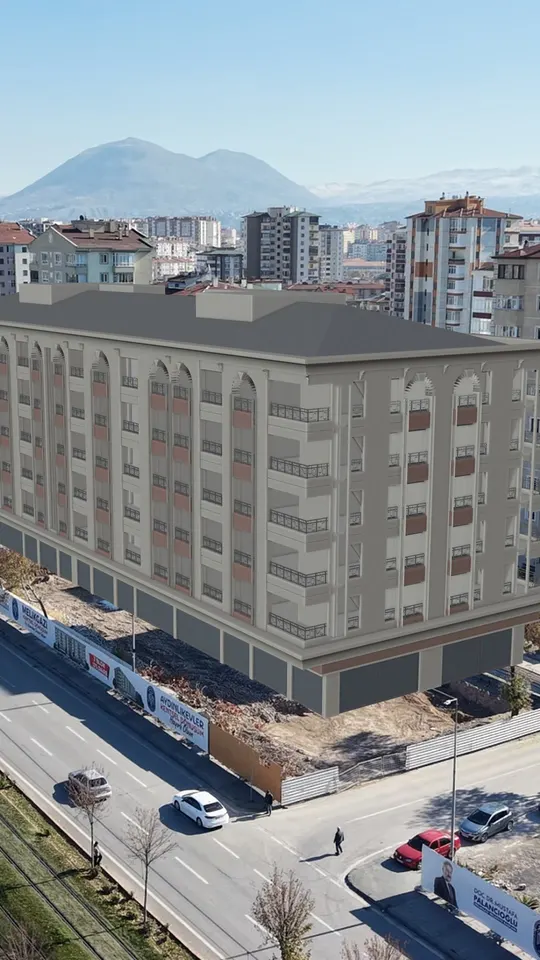
A sales film can't afford AI's habit of redrawing a building a little differently every time: the floor count drifts, the façade changes, the building slides off its plot. So the work was set up the way a visual effects shot is set up, with the real footage and the real architecture as fixed points and AI working between them.
Live action on location
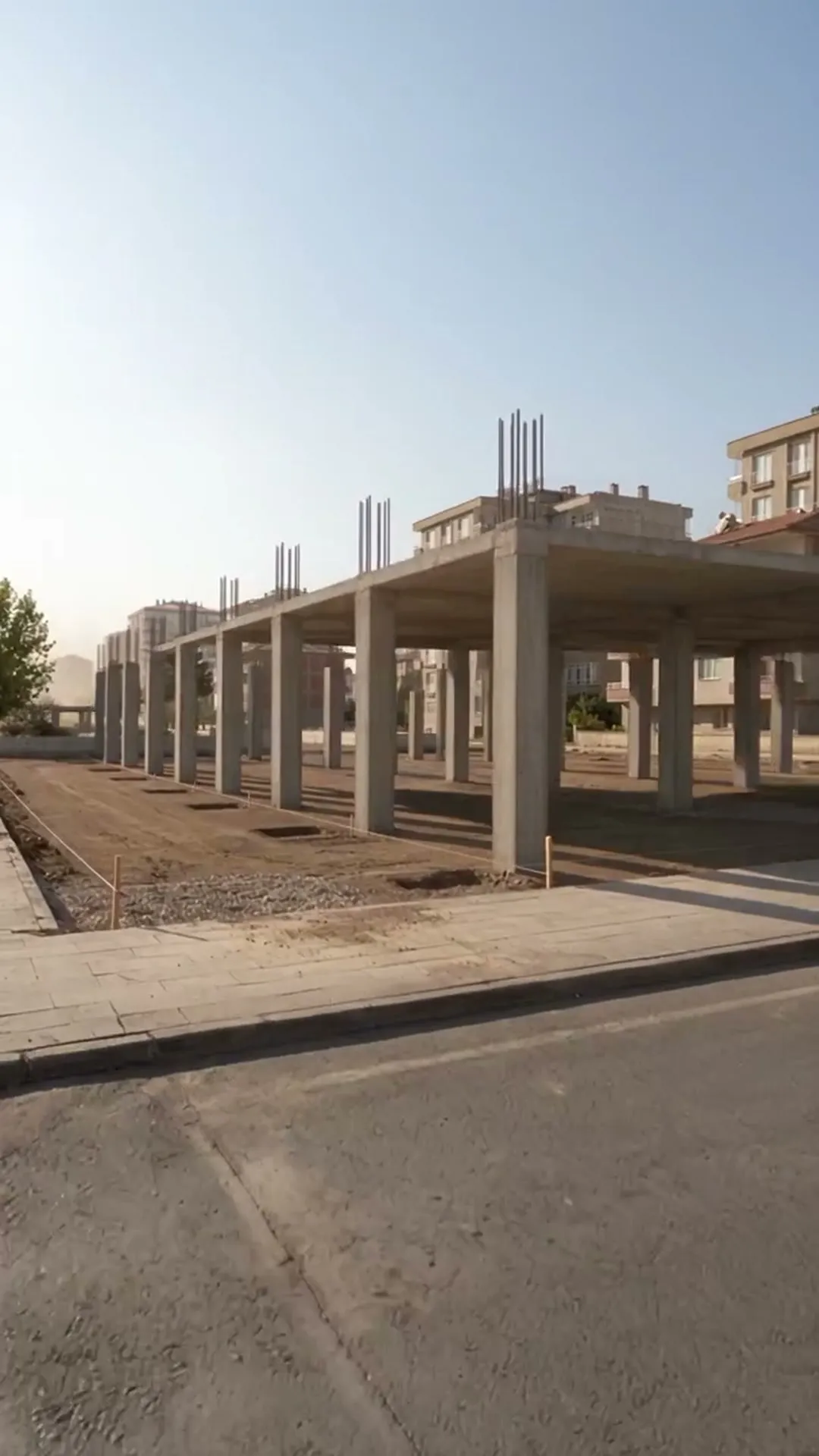
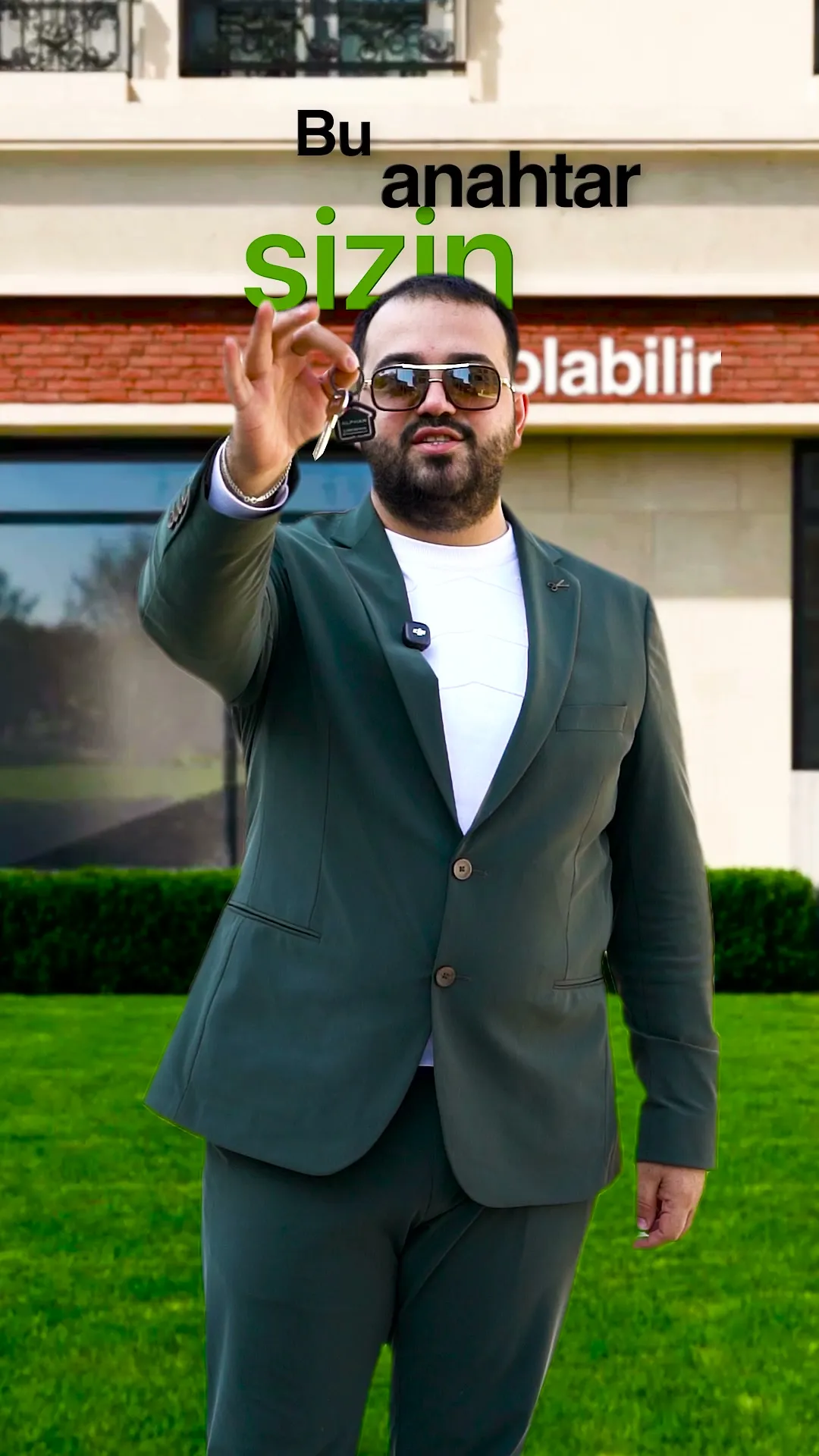
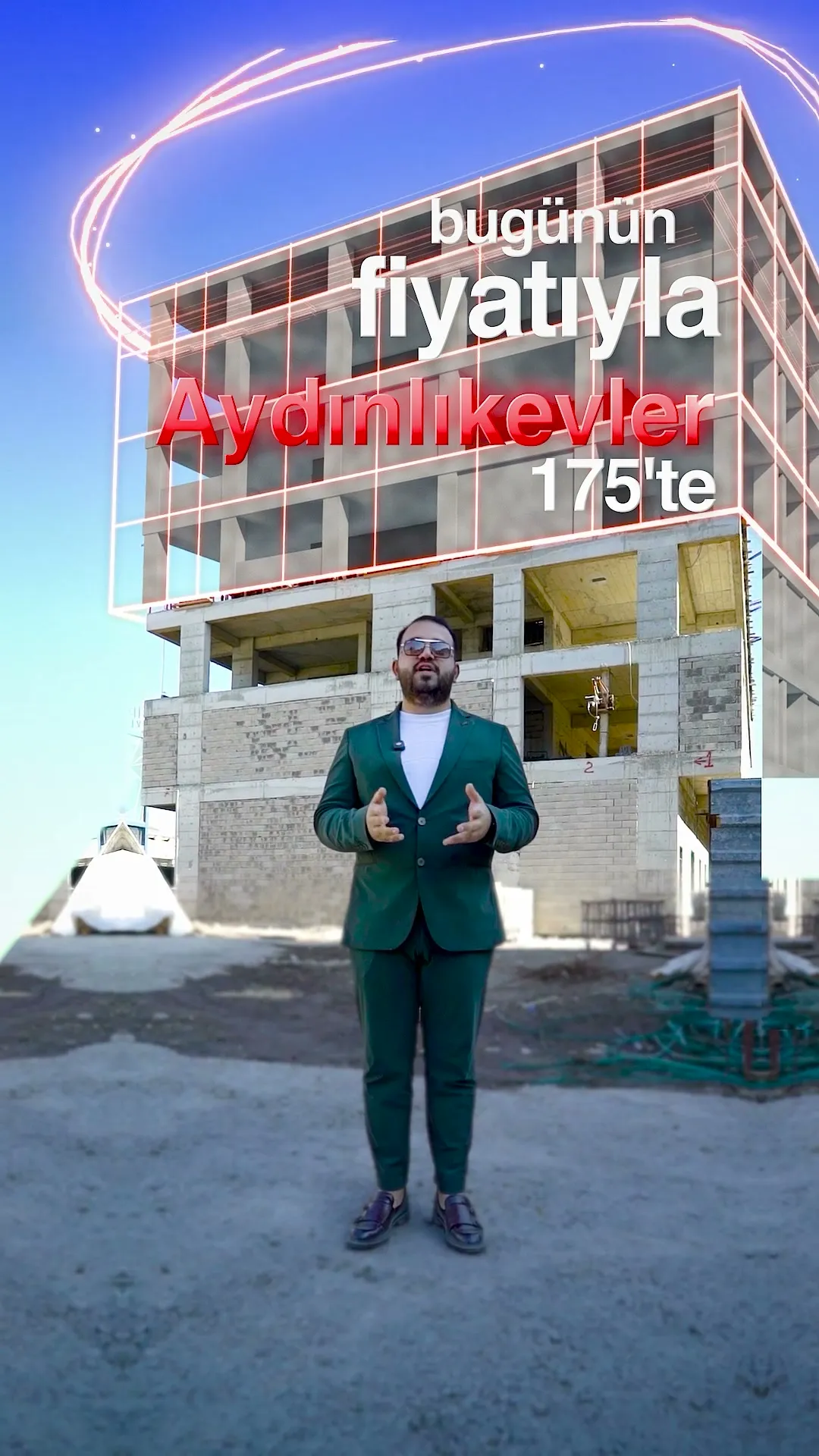
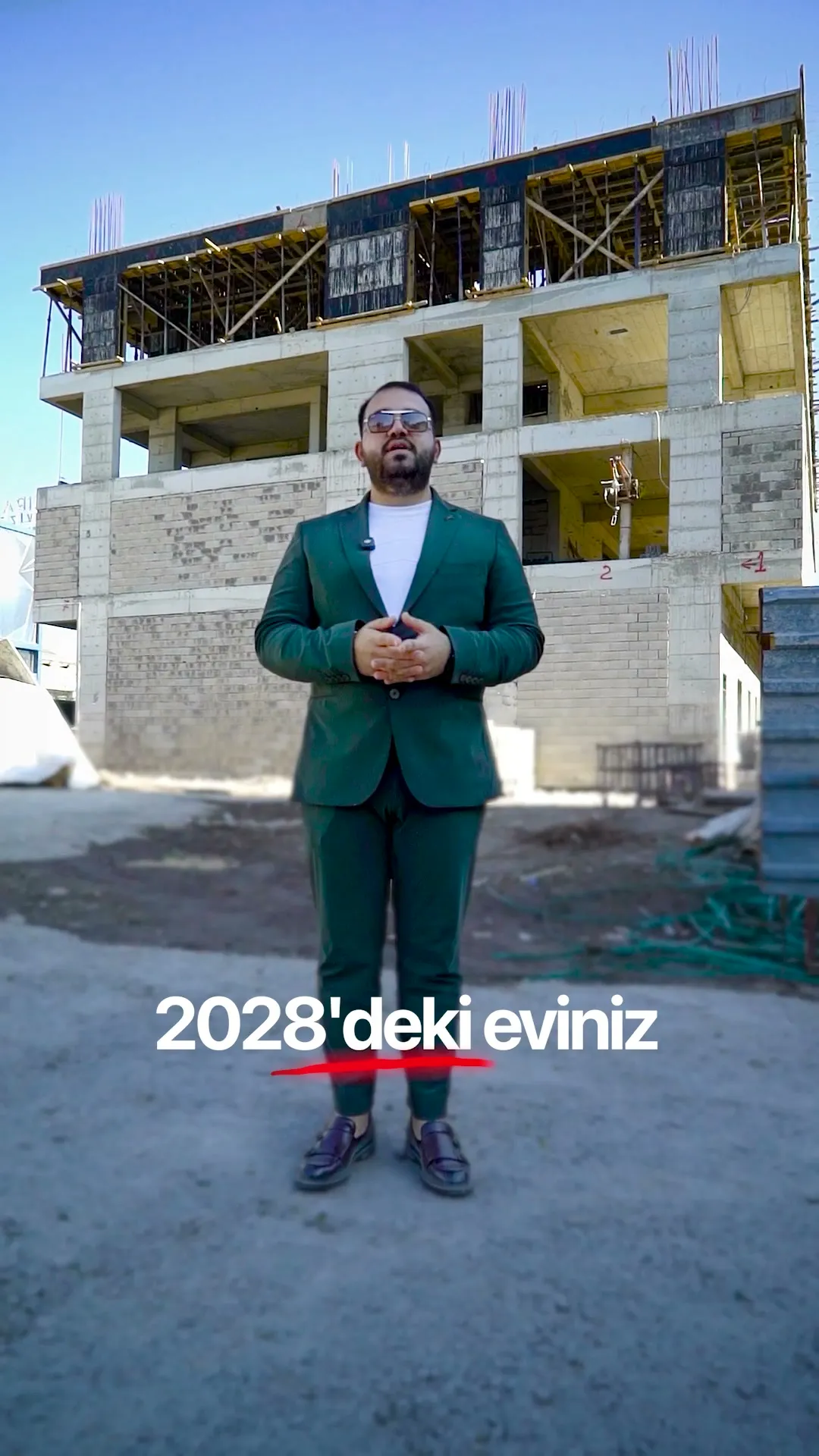
Half a day on site: 11 drone and 15 ground takes at 50 fps, the ground camera turned on its side for native vertical framing. The developer's representative speaks the opening and closing lines to camera, and the voice-over is the same voice, so the ad sounds like the company itself. Camera and drone: Fatih Bozkırlı.
Architecture first, in 3D
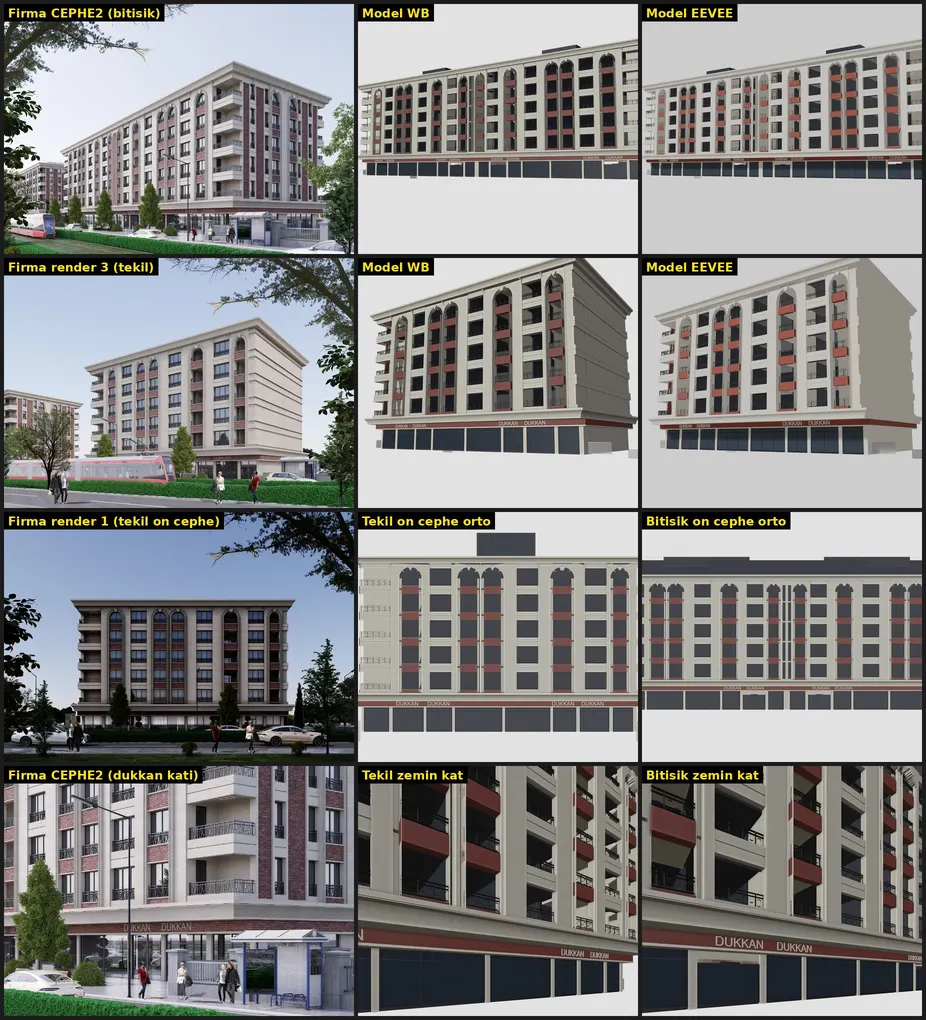
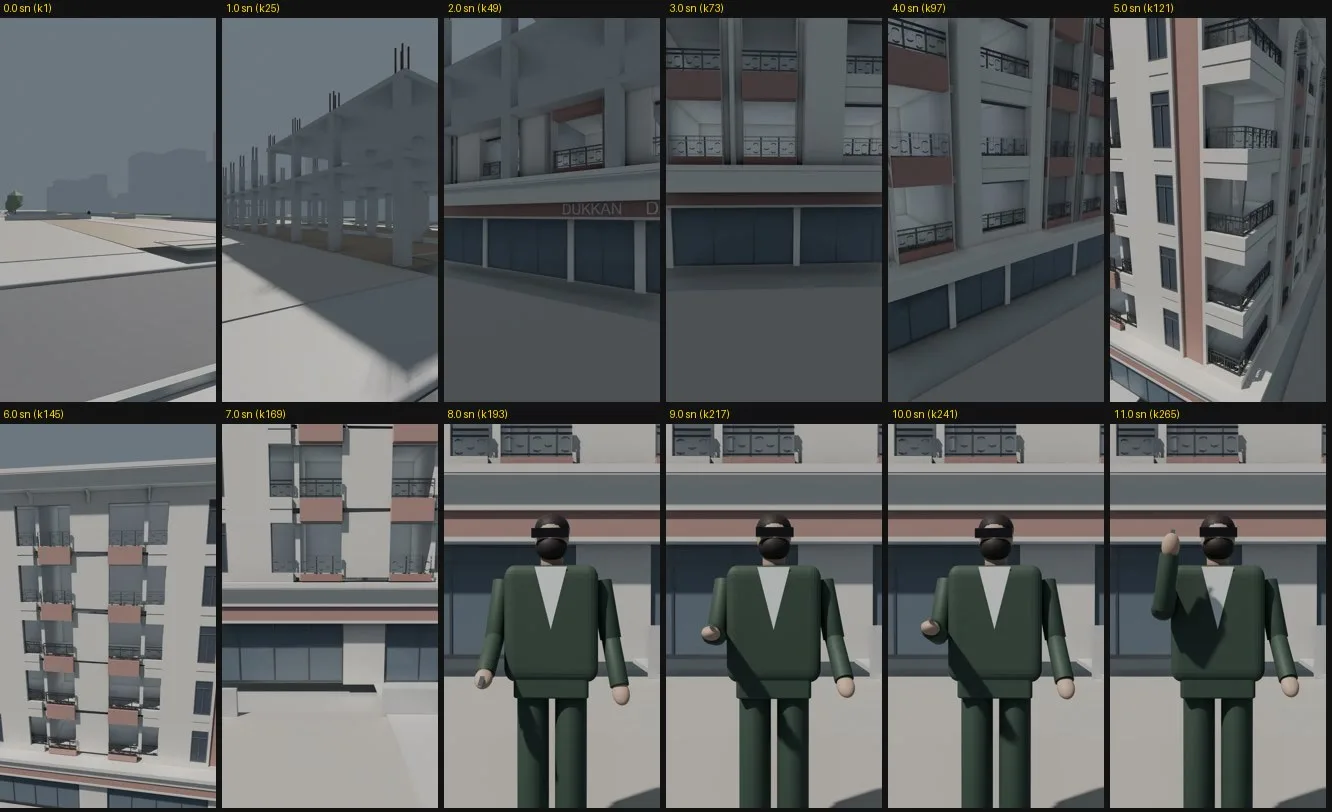
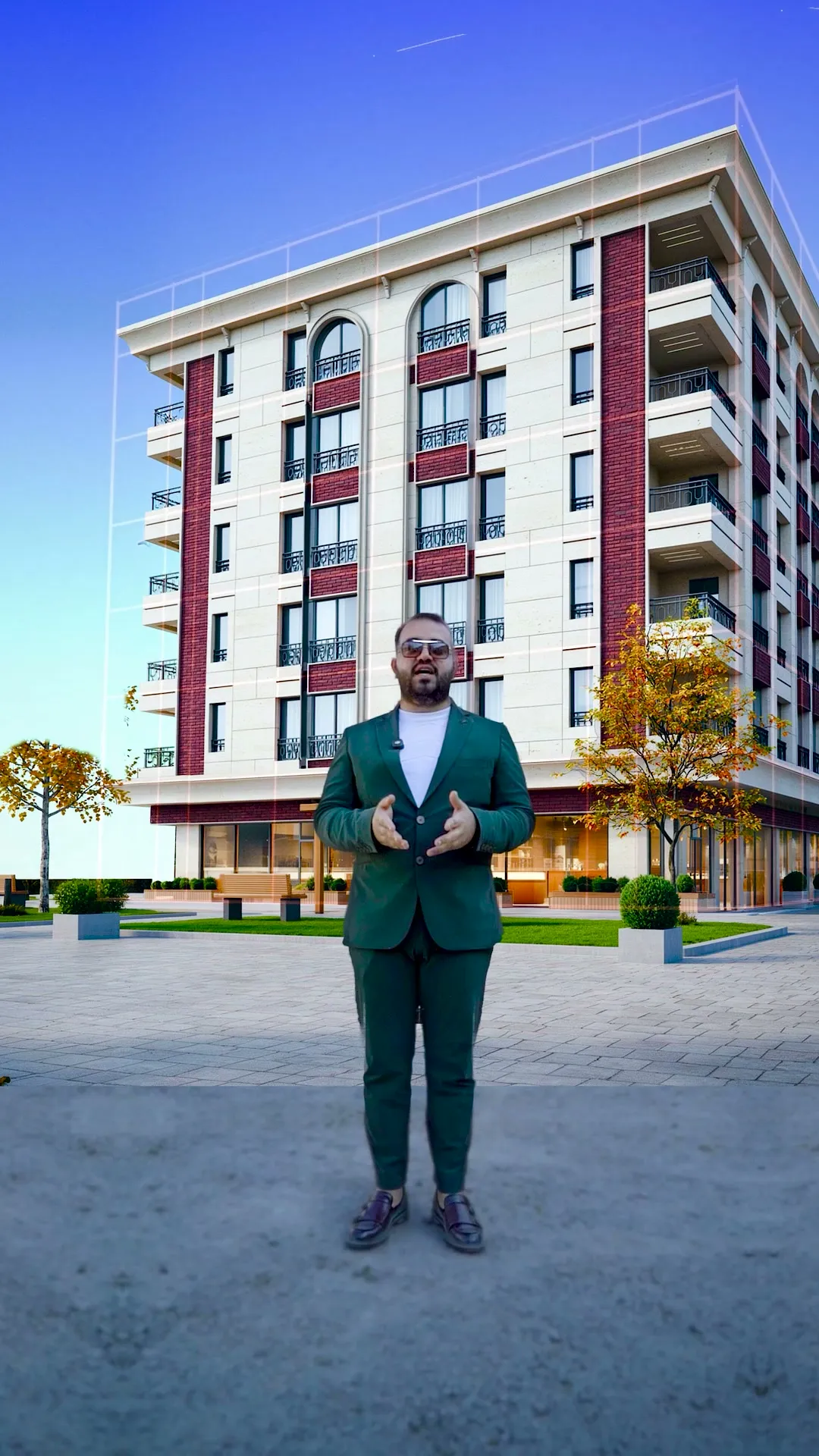
We rebuilt the developer's 3D model in Blender, completed the missing blocks from their renders and took every storey height from the floor plans. Then the model was matched to the camera of the real drone footage, so the building stands on its true plot, at its true height, before AI touches a single pixel. Most exterior shots were generated from these guide frames.
AI on rails
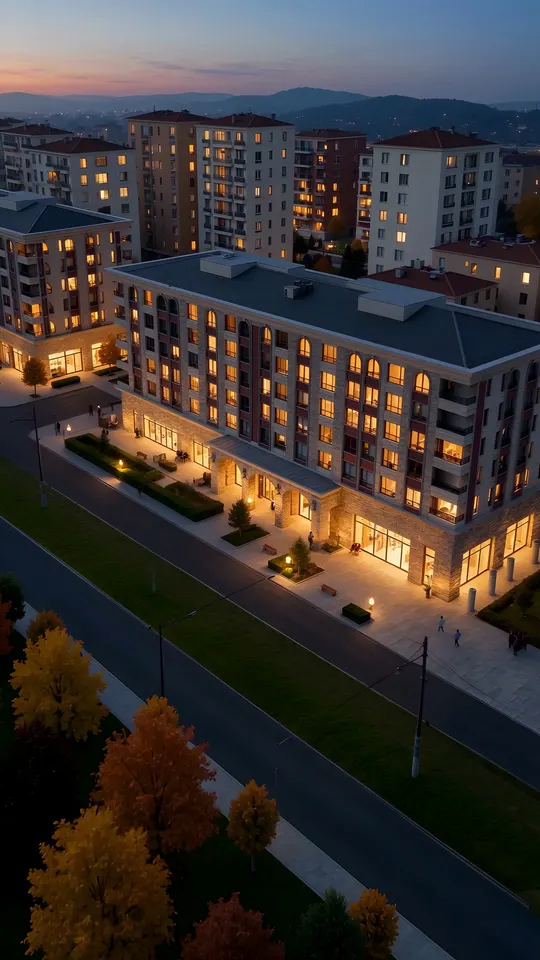
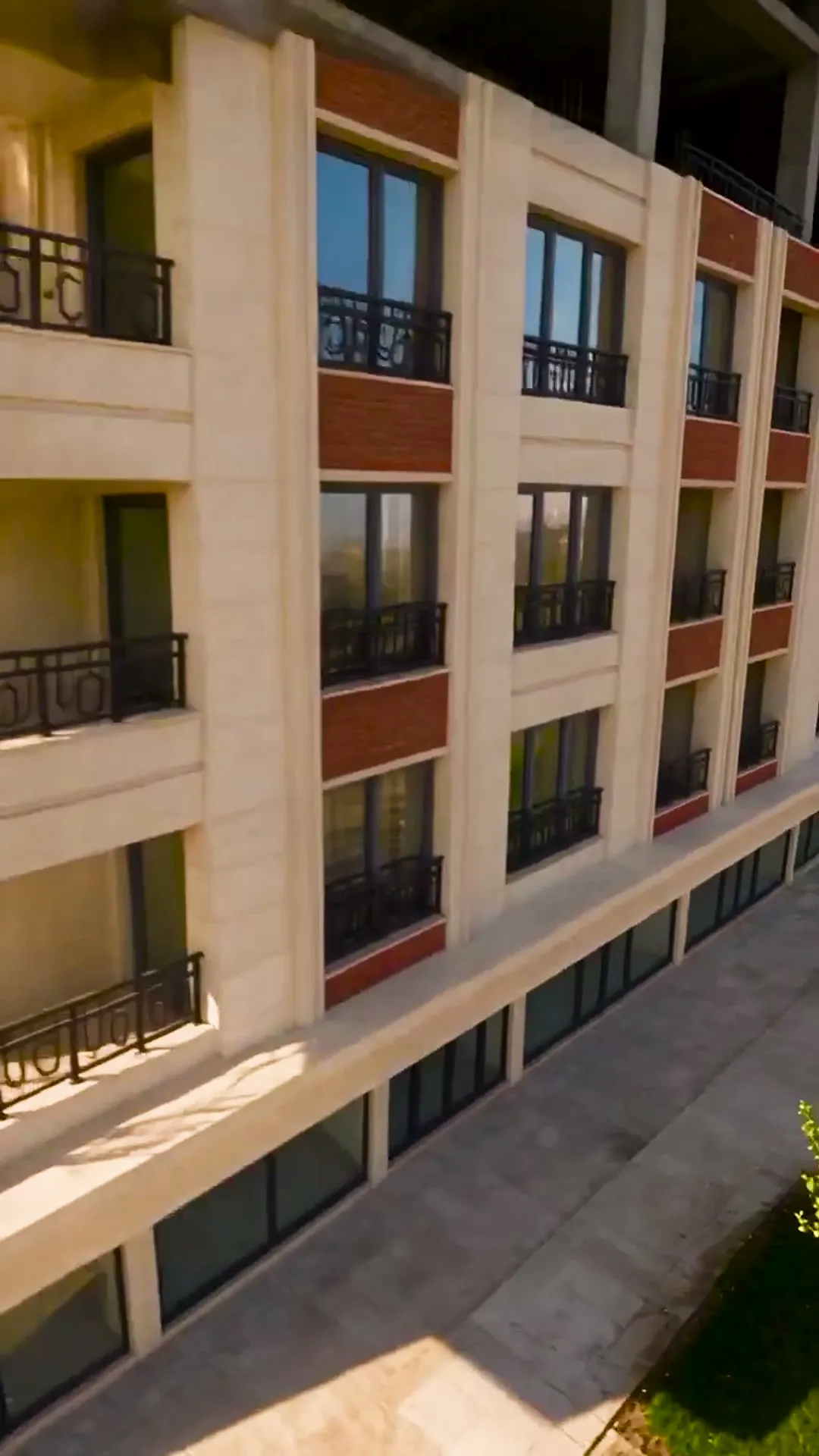
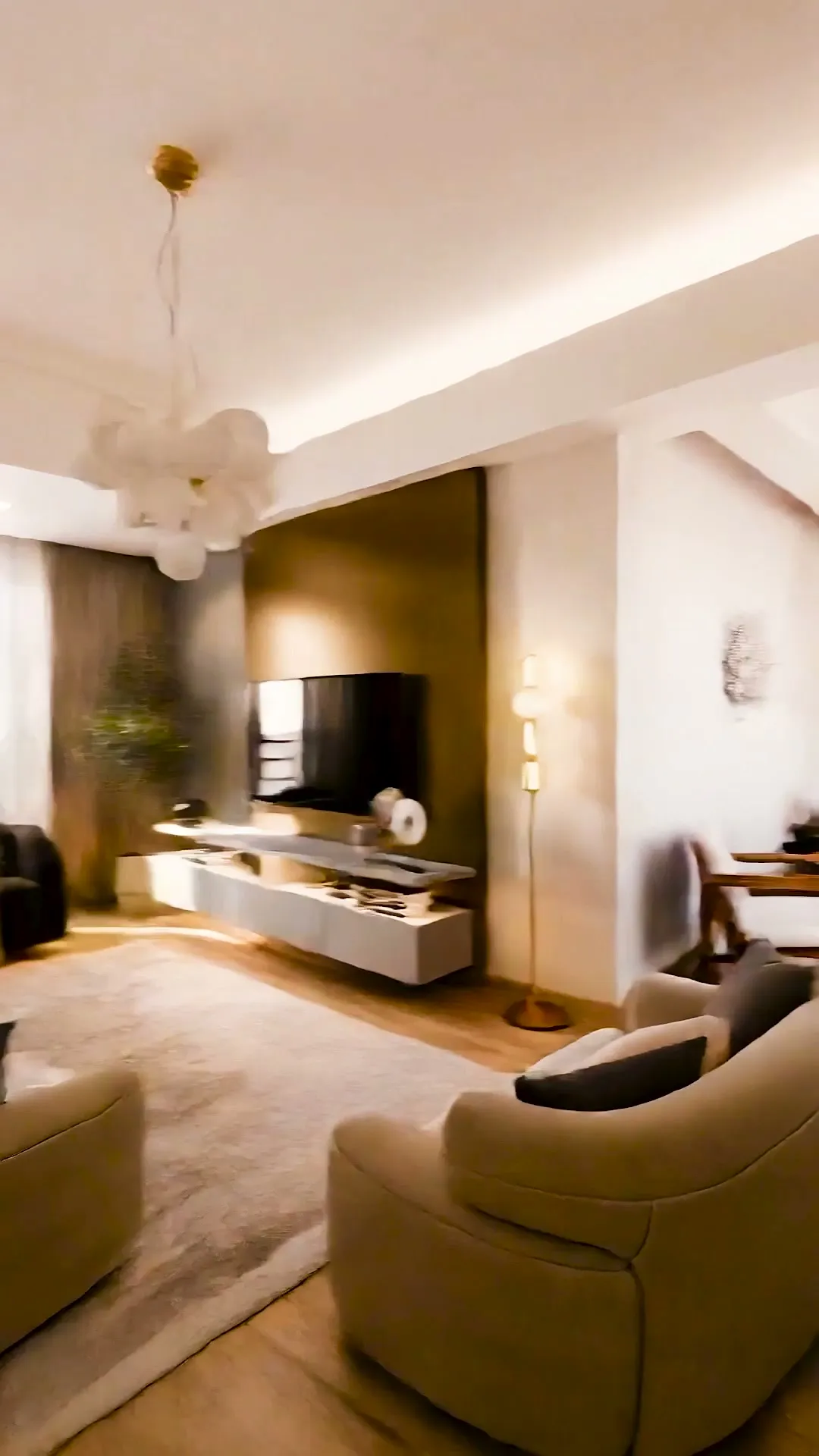
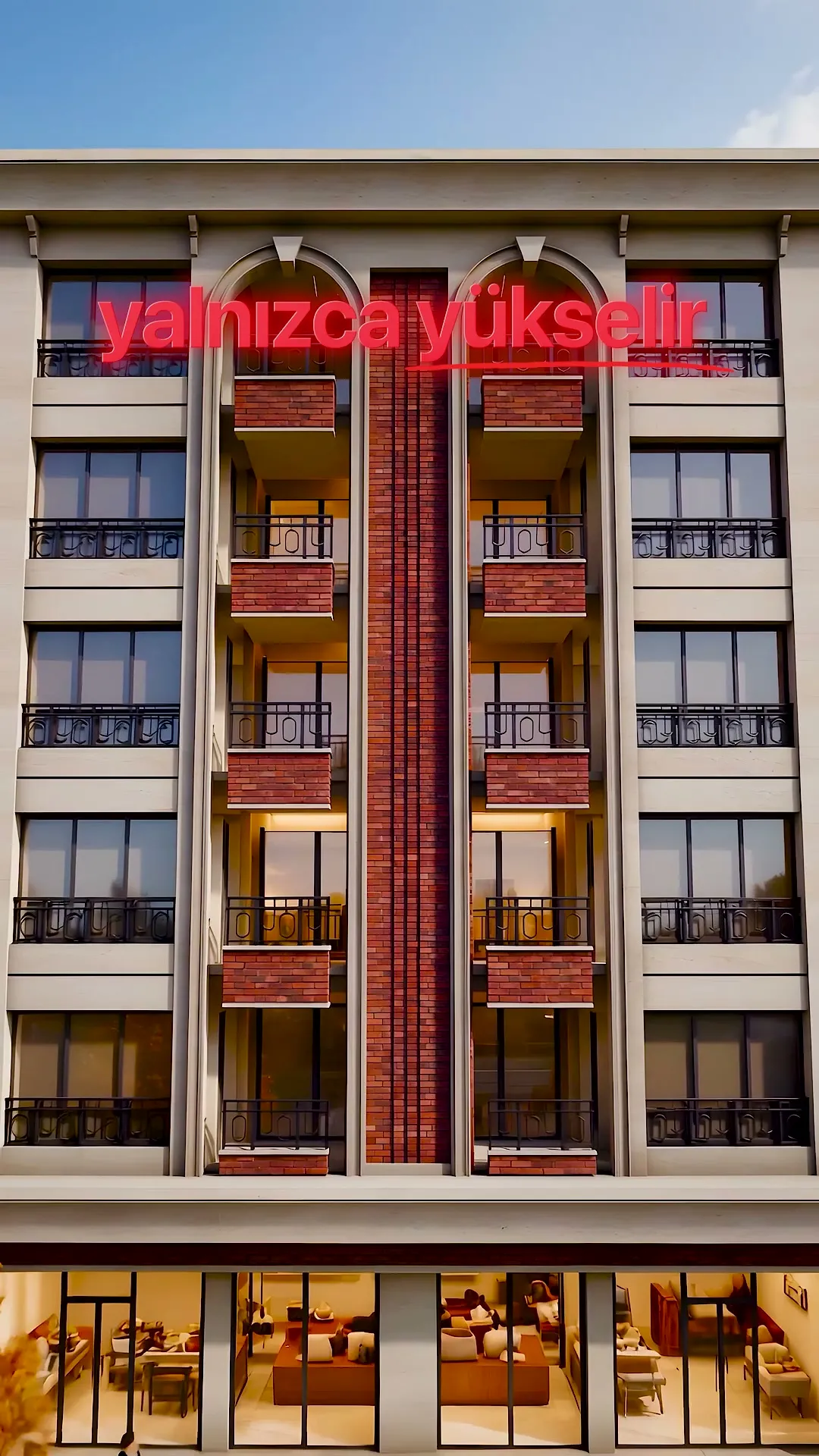
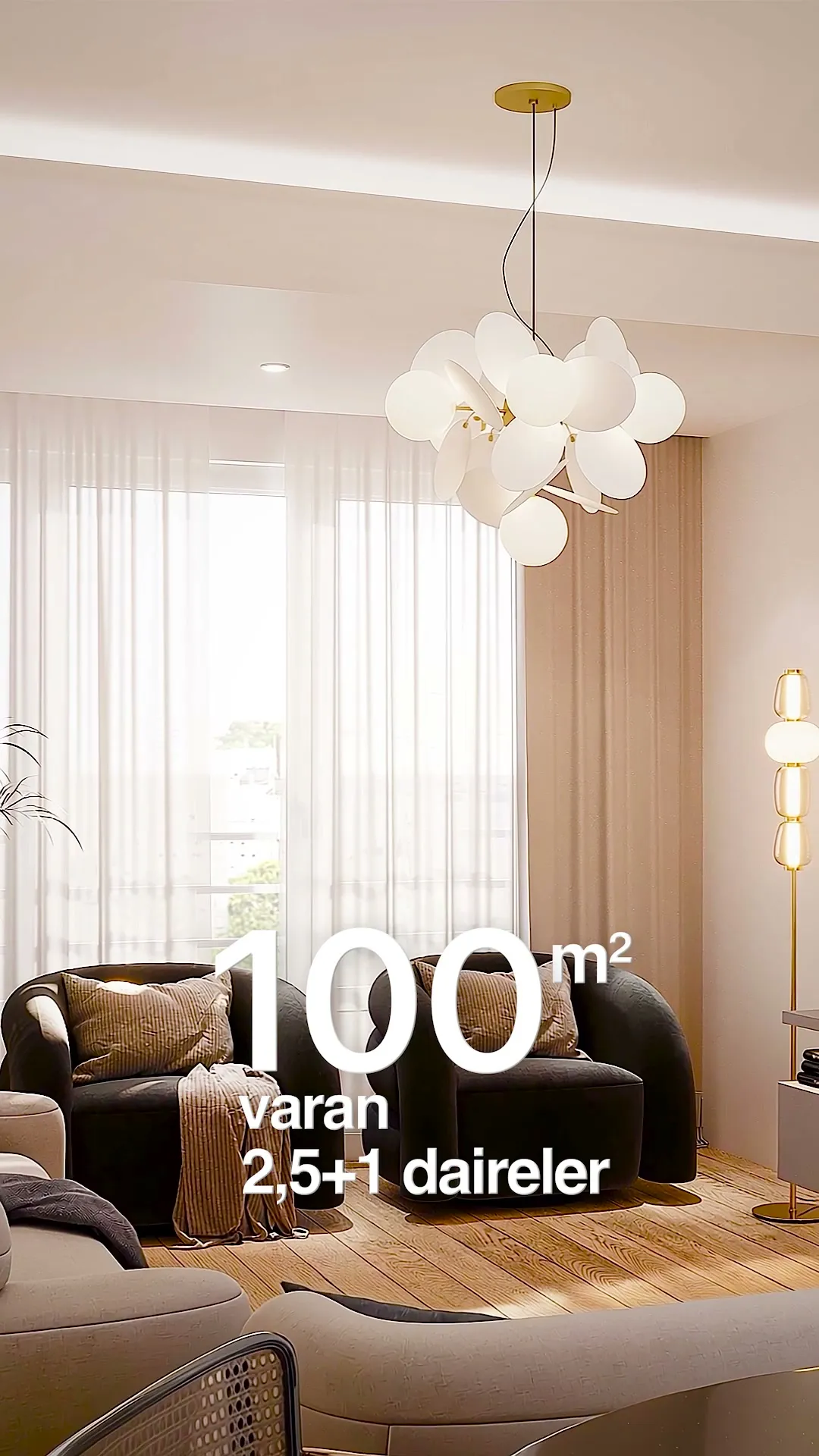
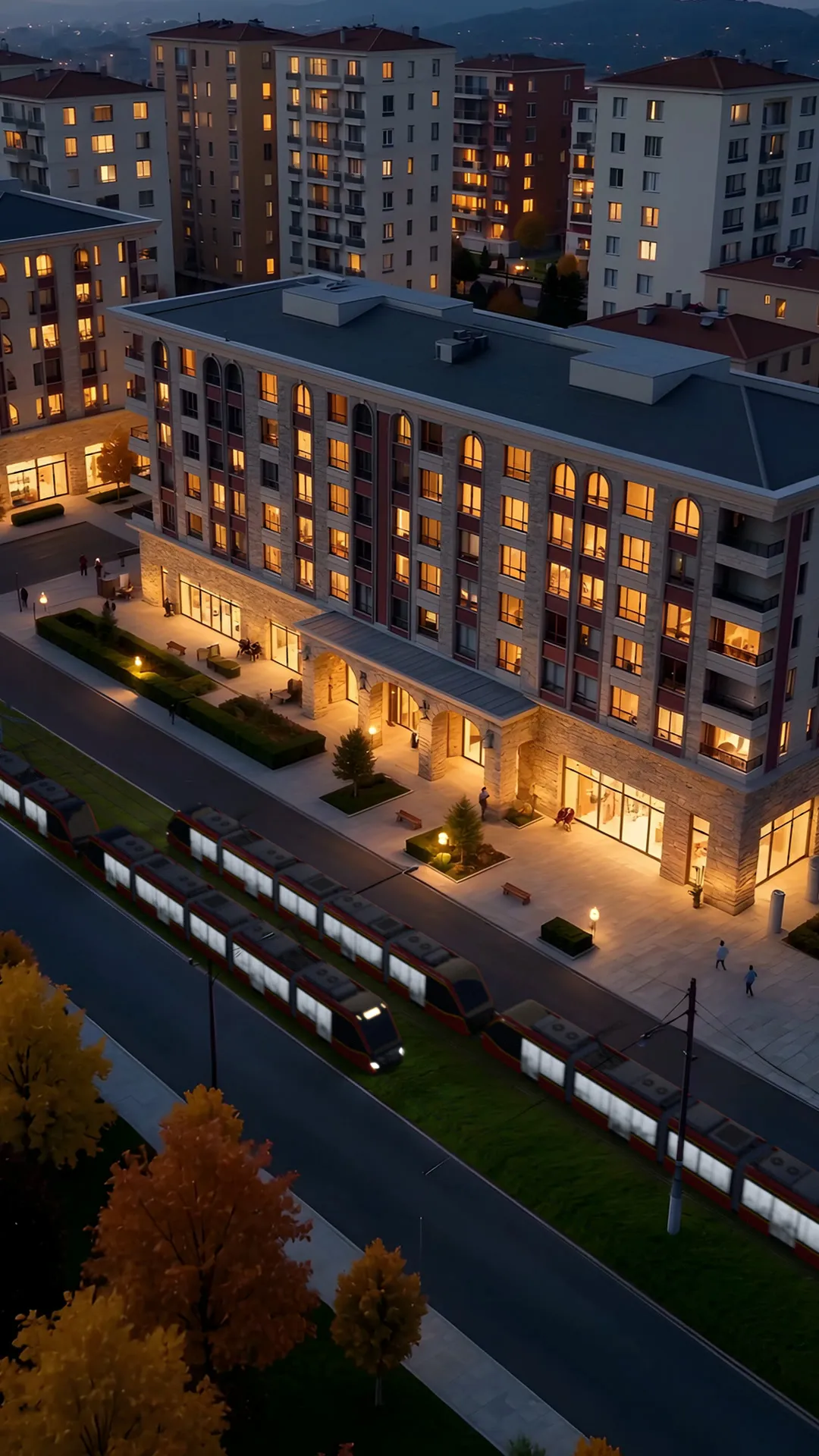
Finished façades, pavement and tram-stop life, interiors and the shift from day to night were generated with AI, held to the developer's 13 renders and the plans of 5 apartment types. AI adds light and life; it never decides where a wall goes.
3D wherever AI can't be trusted
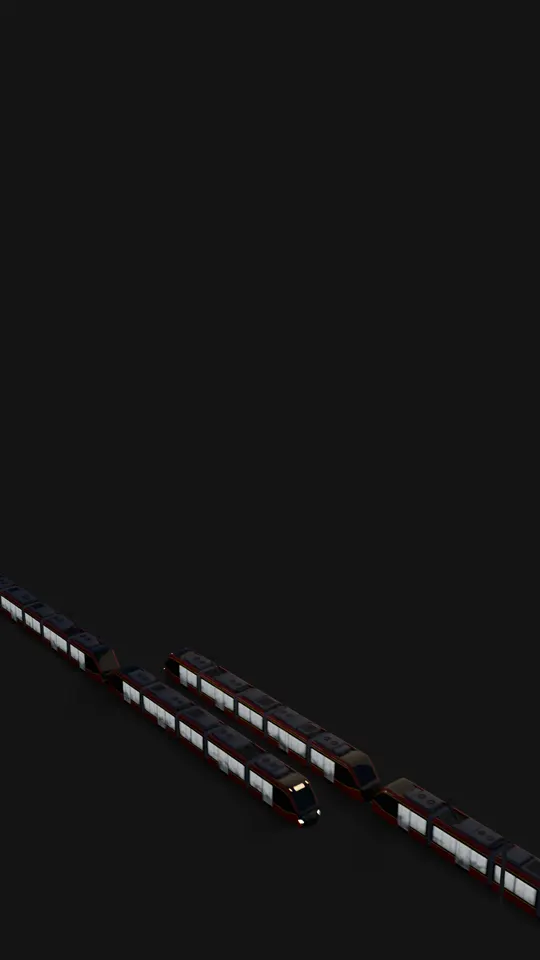
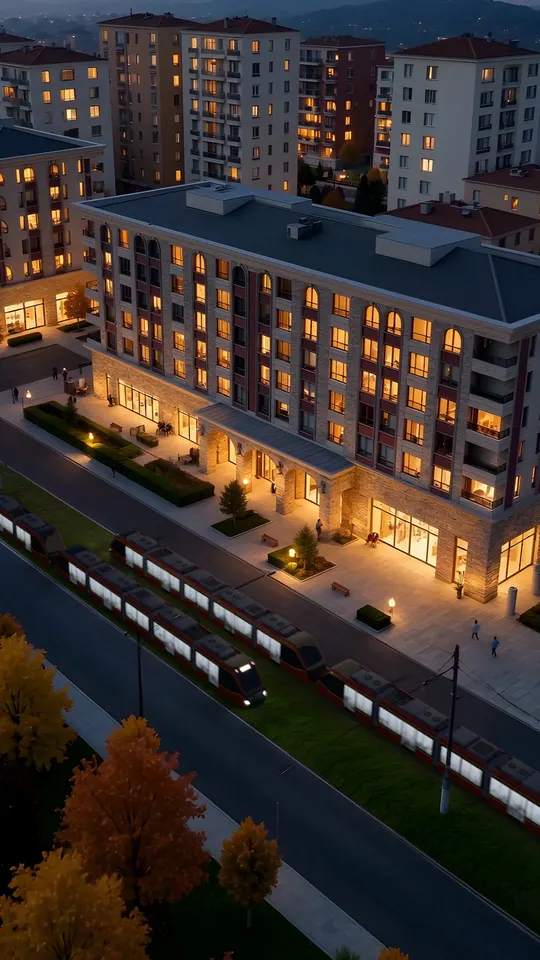
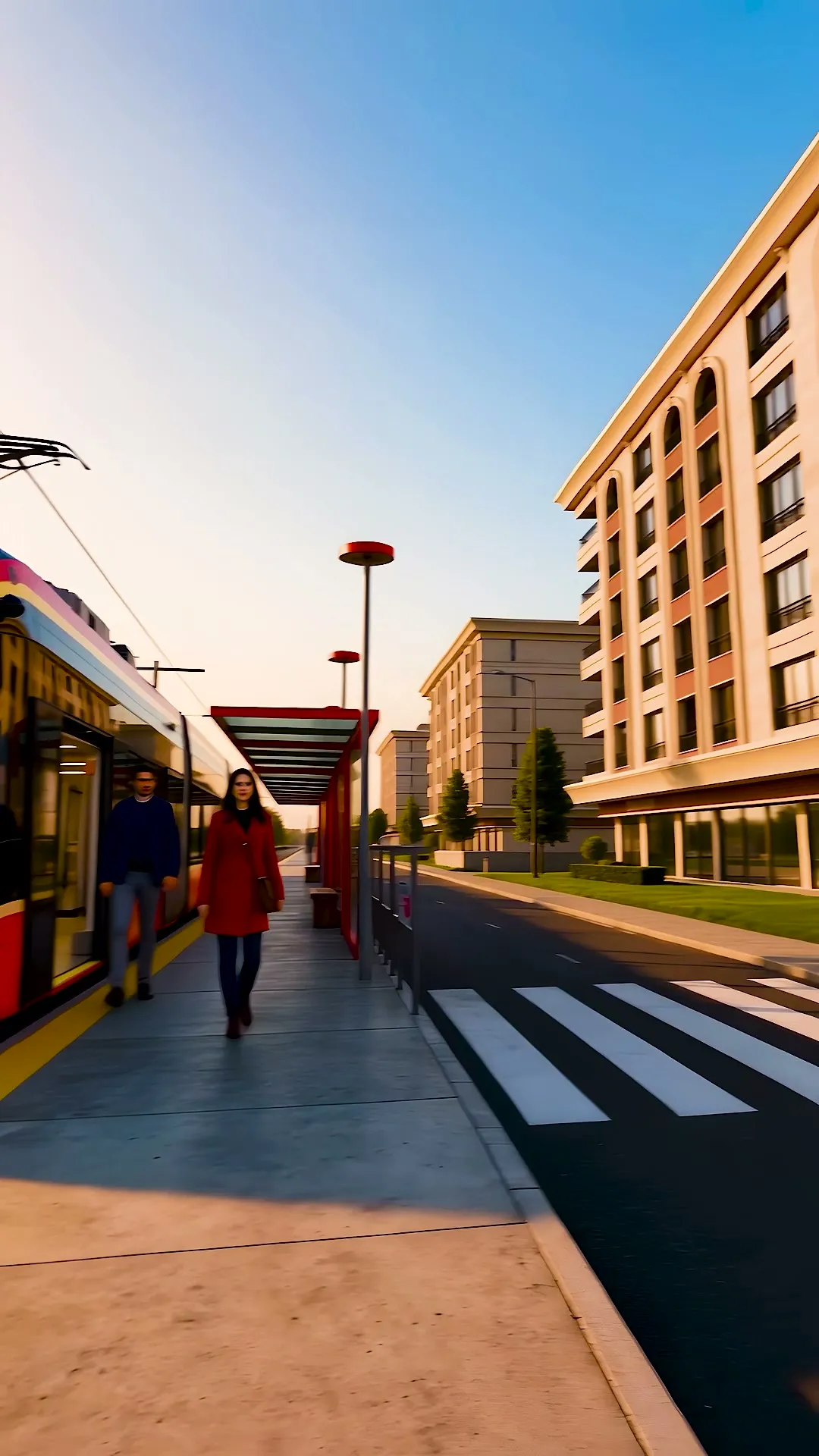
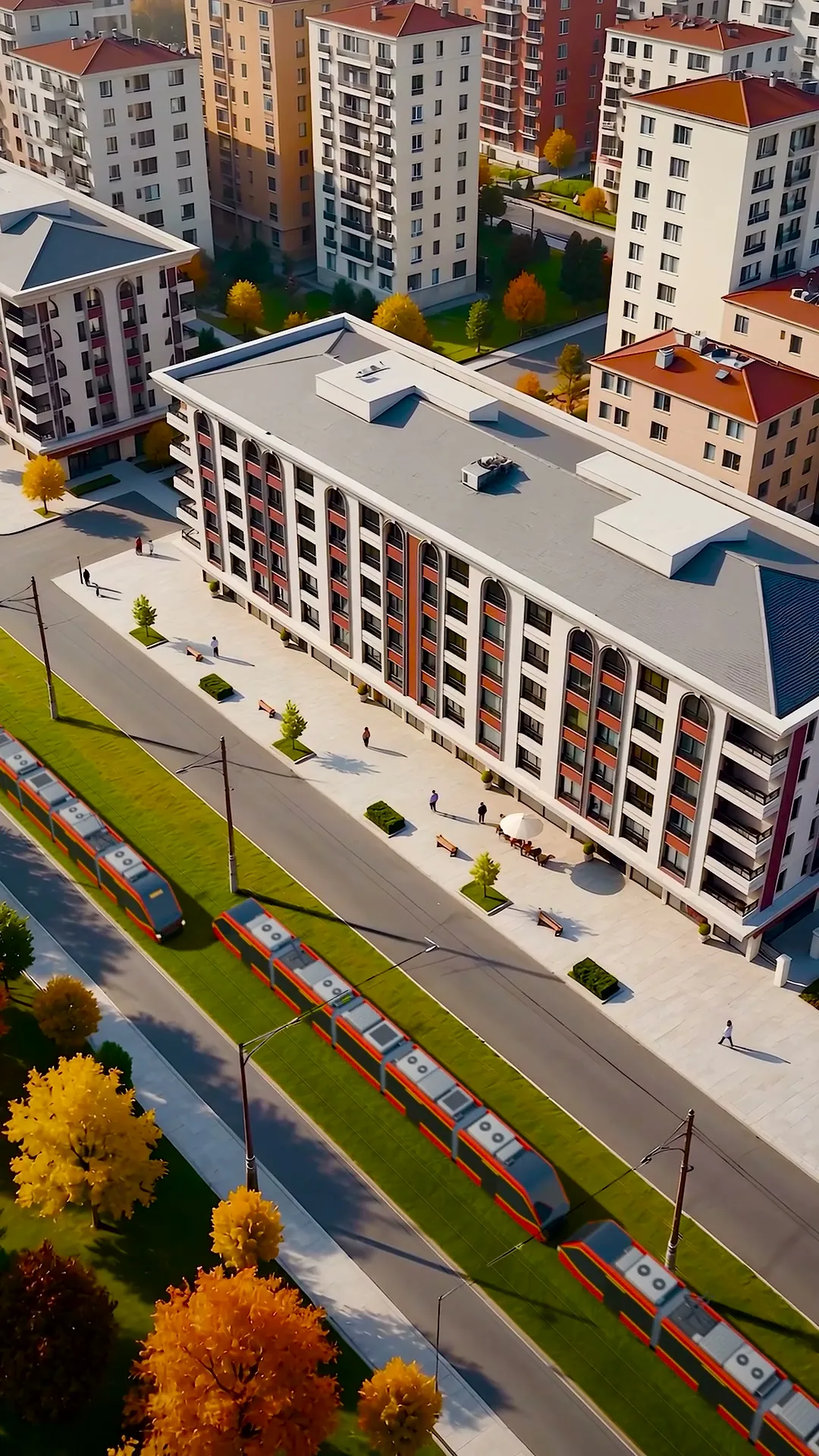
The tram is the project's strongest selling point, and AI put it in the side lane instead of on its grass track, drew it too big and changed the building on the way. So we modelled it at real scale, solved the camera of each AI shot frame by frame and composited the tram onto its own rails.